Home | PEBBL Clinical Research | Research Updates | PEBBL Research Update Q2 2026: Year One Recap
PEBBL — Progress through Evidence-Based Behavior Lab — is Bierman’s practice-embedded research program. This inaugural issue recaps what we have been working on, what we have learned, and where we are headed in year two.
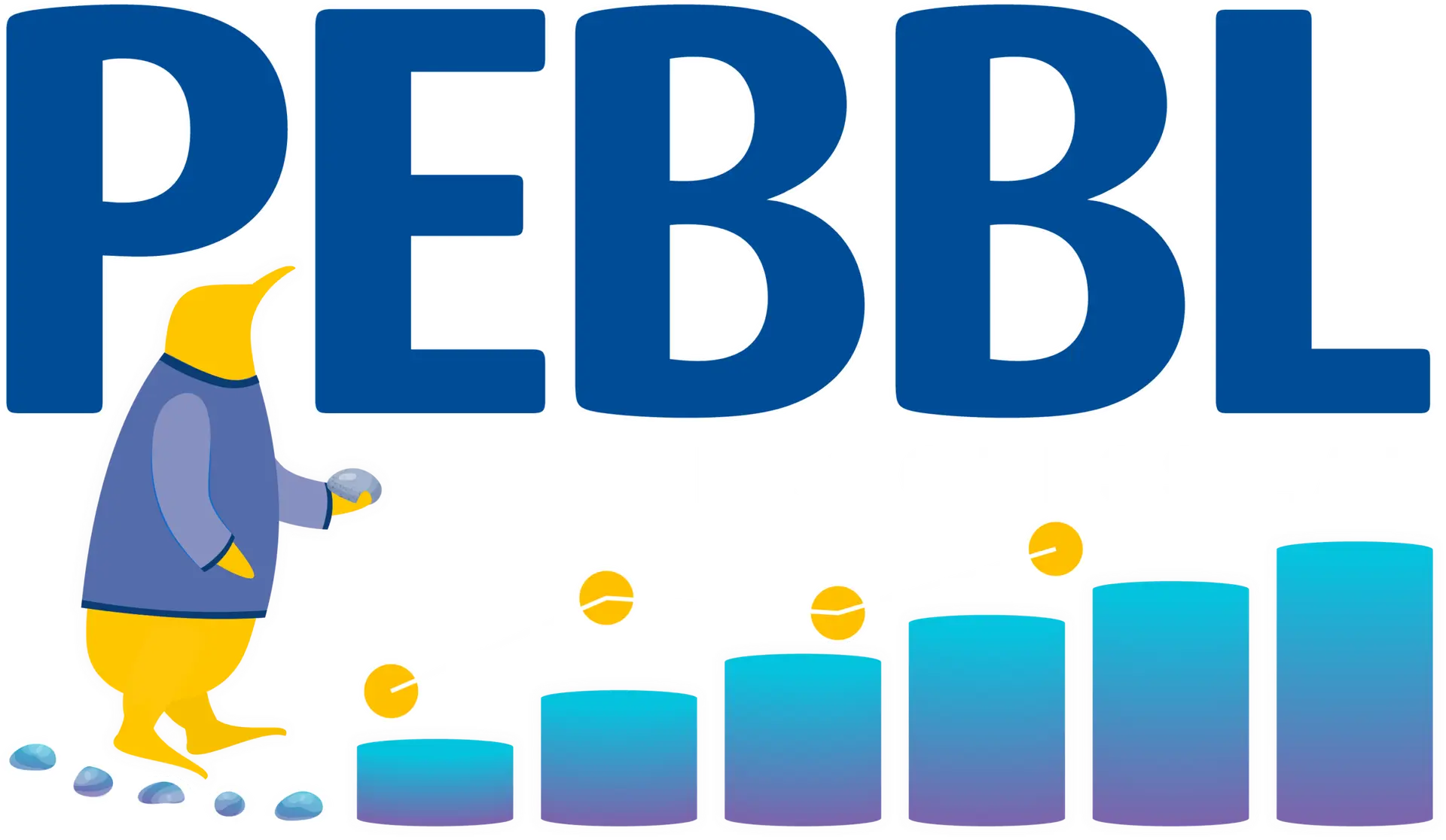
One year ago, we formally launched PEBBL as our practice-embedded research engine. What began as a commitment to learning in public has grown into something real: active studies, findings presented at national conferences, a team of contributors, and a growing network of university and community partners who want to build with us.
This inaugural issue of the PEBBL Research Update is our first step toward a quarterly cadence of transparency. It is a recap of what we have been working on, what we have learned, and where we are headed. We are here to share our work honestly and invite you into it.
Thank you to the clinicians who contributed their time and questions, the families who trusted us with their children’s data, and the partners who saw potential in what we are building.
Dr. Chrissy Barosky, BCBA-D, LABA (MA, TX, UT), LBA (RI, NC, IN)
Chief Clinical Officer
Dr. Lauren D’Amato, BCBA-D, LBA (NJ, NY, RI), LABA (MA)
Vice President, PEBBL
PEBBL (Progress through Evidence-Based Behavior Lab) is Bierman’s practice-embedded research program. Instead of treating research and clinical care as separate pursuits, we embed inquiry directly into everyday therapy sessions.
The data our clinicians collect while working with children becomes the raw material for studies that improve care, develop clinicians, and advance the field.
The name reflects the philosophy. A pebbl(e) is what a penguin offers to build an enduring nest — one small, consistent action laid down with intention. That is how we approach research: one well-placed observation at a time, compounding into something that lasts.
Real sessions power real science, and real science powers better sessions.
Our first year of formal PEBBL activity covered three primary areas of inquiry, each grounded in questions that emerged from clinical practice. Here is a plain-language summary of each.
When clinicians learn new programs, the quality and speed of their learning matters for children’s outcomes. Behavior technicians who implement therapy procedures more accurately, and more fluently, create more high-quality learning moments per session, less re-teaching, and more momentum.
We explored whether short, timed practice sprints could accelerate staff learning of new Behavior Support Plans. The approach, called Fluency-Based Instruction (FBI), focuses on building both accuracy and speed together rather than accuracy alone.
Bar chart comparing procedural fidelity (percent correct implementation) before and after fluency-based instruction across six staff-client-Behavior Support Plan pairings. All six pairings improved. Pre-FBI values ranged from 38% to 85%. Post-FBI values ranged from 81% to 100%. The largest gain was 51 percentage points. Detailed values are available in the data table below.
| Staff–Client pairing | Pre-FBI | Post-FBI | Change |
|---|---|---|---|
| Staff 1, Client 1 | 58% | 88% | +30 |
| Staff 1, Client 2 | 85% | 91% | +6 |
| Staff 1, Client 3 | 55% | 81% | +26 |
| Staff 2, Client 1 | 38% | 89% | +51 |
| Staff 3, Client 1 | 79% | 100% | +21 |
| Staff 3, Client 2 | 77% | 100% | +23 |
After introducing brief daily fluency practice, staff implementation accuracy improved steadily across learners and procedures. Supervisors spent less time re-teaching foundational steps and more time shaping higher-level clinical skills. This is a single-case example. We are continuing to replicate and refine.
Most ABA curricula present skills as lists. A child either has a skill or doesn’t. What those lists often miss is the architecture beneath them: which skills build on each other, in what order, and why. When practitioners are left to figure that out by intuition, sequencing decisions vary across clinicians and centers in ways that are hard to measure or improve.
This work focuses on developing and empirically validating a comprehensive scope and sequence across early learning domains, including imitation, joint attention, early language, and play. Rather than treating these as separate skill buckets, we are studying how they function as interdependent learning systems.
The deeper question driving this work: can we use data already present in routine ABA sessions to test whether our sequencing assumptions are actually correct? We are exploring that using practice-based research designs, including single-case experimental designs and embedded generalization probes, without disrupting clinical services to do it.
Side-by-side comparison of two ABA curriculum approaches. Approach 1, the Flat Checklist, lists six discrete skills with no defined order: imitate actions clap hands, imitate actions wave, respond to joint attention bid, label common objects, initiate joint attention, and request preferred item. With this approach, one skill taught equals one skill gained, and sequencing depends on clinician intuition. Approach 2, the Developmental Scope and Sequence, organizes skills as a four-tier pyramid where each layer rests on the one beneath it. From foundation to top: Imitation forms the base, then Joint Attention, then Listener Response, then Expressive Language at the top. With this approach, skills compound and gains accelerate because prerequisites establish momentum.
Early findings are shaping how we think about prerequisite relationships across domains, particularly in the development of joint attention and early verbal operants. This work will be presented at the New Jersey Association for Behavior Analysis conference in 2026.
We have nearly 20 years of therapy data. The question we are asking now: what does that data tell us about early signals that predict longer-term outcomes like graduation and transition to less restrictive settings?
This work is in development, and we are transparent about that. We are exploring patterns related to attendance consistency, programming update frequency, therapy intensity, and initial learner profiles — asking whether combinations of these variables can give clinicians earlier, more actionable signals about how a plan is working.
We compared an AI model's predictions to the judgement of trained clinicians. Here is how well they agreed.
Comparison of an AI model's school-readiness predictions against the judgement of trained clinicians, broken down three ways. Overall agreement was 89 percent, meaning the model and clinicians gave the same answer nearly 9 out of 10 times. By decision type: when predicting "Yes, ready to graduate," the model and clinicians agreed 66 percent of the time, or 2 out of 3 predictions. When predicting "Not yet, keep going," they agreed 92 percent of the time, or nearly 1 in 1 predictions.
This means the model and clinicians gave the same answer about school readiness nearly 9 out of 10 times.
agreed the child was ready for school transition
2 out of 3 predictions matched
agreed the child needed more time in therapy first
Nearly 1 in 1 predictions matched
Early analysis suggests patterns worth tracking, including potential relationships between weekly programming update cadence and six-month outcome markers. We are in the replication phase and will share plain-language findings as they become reliable. This work does not make individual predictions or promises. It is about building better decision-support tools for clinical teams.
PEBBL is designed for clinicians at every stage of their career. You do not need prior research experience — you need curiosity and a question worth exploring.
Flexible hours. Data collection and literature review. A great starting point for any clinician who wants to engage with research without committing to a full project.
Learn moreDesigned for BCBAs who are established in their clinical work and want to expand into research. Mentorship and guidance. Manage a research project from development to discussion.
Learn moreProtected time leading a pragmatic study aimed at peer-reviewed publication. Opportunities for established researchers who seek collaboration.
Learn moreSenior clinicians and external experts who meet quarterly to vet study ideas, mentor Fellows, and help shape the research roadmap.
Learn moreEach month, PEBBL hosts a Research Spotlight Webinar featuring current studies, early data, and practical takeaways. BCBAs earn free CEUs for attending.
We operate like a teaching hospital for pediatric therapy, which means research and clinical training are not afterthoughts. They are infrastructure.
We partner with university programs to offer:
Our harmonized measurement approach across clinicians and centers makes our data particularly well-suited to questions requiring real-world scale and replicability.
Bierman awards multiple $2,000 to $3,000 scholarships per year to emerging ABA clinicians in graduate programs nationwide. Recipients receive cash awards, mentorship touchpoints with our clinical leadership team, and resume-ready recognition.
Applications are open to external candidates in all 50 states who have completed at least 8 graduate credits in an ABA master’s program.
Our next round opens in late May. Sign up to be the first to know!

As we head into year two, here is a preview of the questions driving our next phase of inquiry.
How training intensity relates to skill generalization across home and community settings.
MoreDoes higher-dose caregiver training translate to faster skill generalization outside the center? We're examining training frequency, session duration, and caregiver confidence scores against home-setting skill data.
Co-authoring AAC goals with SLPs and examining outcomes when ABA and speech targets are formally aligned.
MoreWhen ABA and speech teams formally align AAC goals, do children acquire functional communication faster? We're piloting co-authored goal sets and tracking generalization across providers.
Continuing to build and replicate early outcome pattern analysis with a growing dataset.
MoreCan early session-level signals reliably predict six-month outcome markers? We're expanding the dataset, testing replication, and developing decision-support tools for clinical teams.
Expanding FBI applications across more program types and staff experience levels.
MoreDoes fluency-based instruction scale beyond Behavior Support Plans? We're testing FBI protocols across new program types and comparing outcomes between BTs at different experience levels.
We will share updates in each quarterly issue as findings become reliable. Our commitment is to learning in public, honest about what is ready, clear about what is still developing.
Apply to a research track, RSVP for the next Spotlight webinar, or explore how PEBBL fits into your career.
Join PEBBLCollaborate on studies, offer practicum placements, or co-author with our clinical team.
Start a ConversationApply for the Rising Clinician Scholarship or explore research opportunities through our External Associate program.
See OpportunitiesIt all starts with a pebbl.
Explore research tracks, upcoming webinars, and partnership opportunities.
Questions or collaboration inquiries: pebbl@biermanautism.com