
In this article
- Core Principles of Naturalistic Teaching
- Types of Naturalistic Teaching Strategies
- Naturalistic Teaching Examples
- Naturalistic Teaching vs. Discrete Trial Training
- How Parents Can Use Naturalistic Teaching at Home
- How Bierman Builds Learning Around Play
- Turn Everyday Moments Into Learning Opportunities
- Frequently Asked Questions
Naturalistic teaching is an ABA method that turns a child’s play, interests, and daily routines into teaching moments. Instead of table-based drills, the therapist follows the child’s lead and rewards success with the very thing the child wanted.
Core Principles of Naturalistic Teaching
Four principles hold this approach together. Understanding them helps you recognize good naturalistic teaching (NAT) in action and apply the ideas at home.
Child-Led Learning
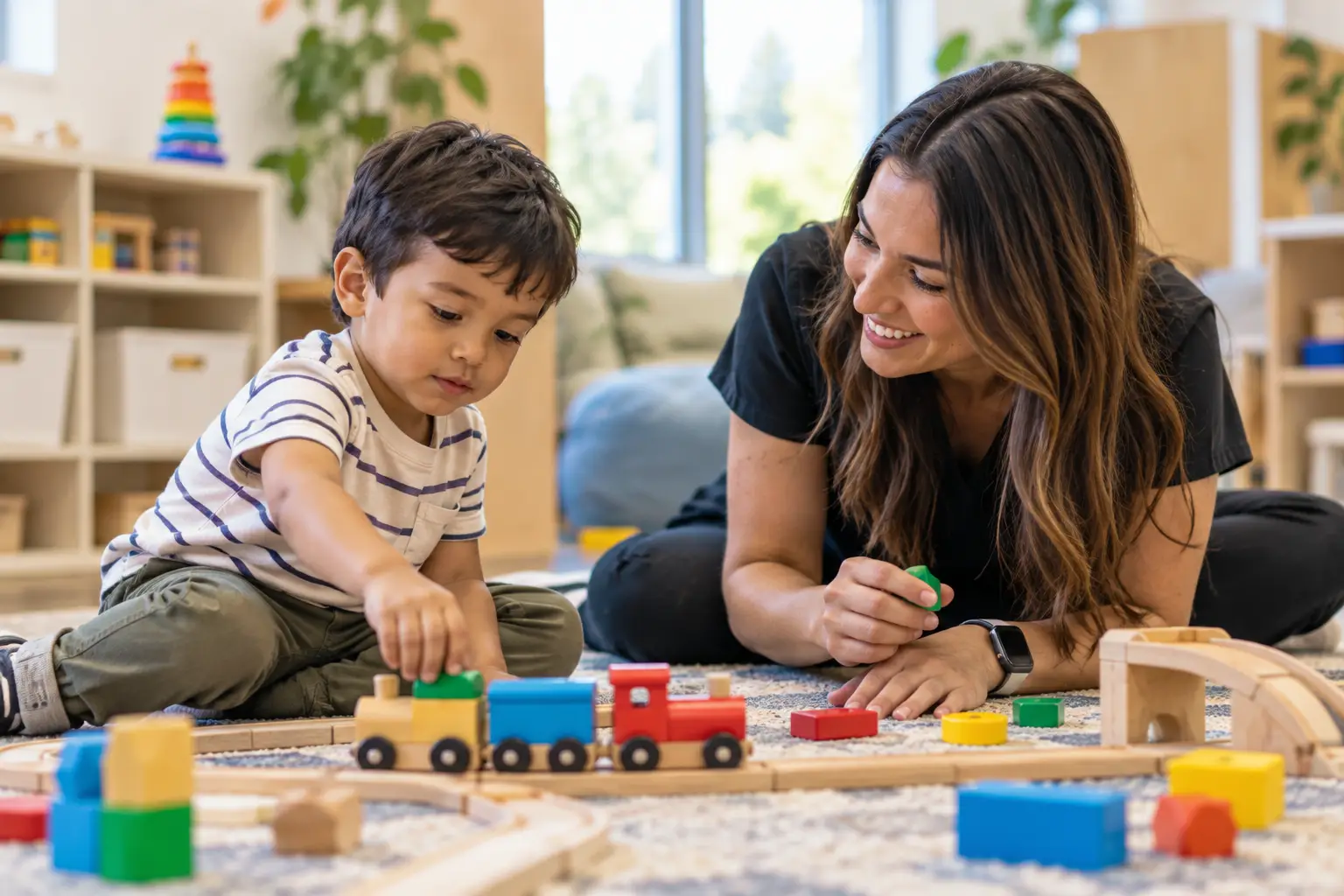
The child picks the activity. If your child gravitates toward trains, the therapist uses trains to teach colors, counting, or requesting. Motivation stays high because your child is already engaged, and following their lead removes the friction that comes from pulling a child away from what interests them.
Natural Reinforcement
The reward is the thing itself. A child who asks for bubbles gets bubbles. A child who says “open” gets the container opened. That tight connection between the request and the outcome mirrors how communication works in everyday life, and it makes the lesson stick.
Arranged Environment
Therapists do not leave everything to chance. They place tempting toys and materials within sight but out of reach, creating natural opportunities for your child to initiate communication. A favorite stuffed animal on a high shelf or a sealed container of crayons both invite a request.
Generalization
Because skills are learned in their natural contexts, they carry over more easily to new settings. A child with autism spectrum disorder who practices greetings on an actual playground is better prepared to greet peers at school than one who only practiced in a therapy room. A National Academies of Sciences, Engineering, and Medicine review of ABA practices identified seven meta-analyses of naturalistic interventions.
Types of Naturalistic Teaching Strategies
Naturalistic teaching is an umbrella term. Two common strategies fall beneath it, and your child’s BCBA may use one or blend both depending on the goal.
Incidental Teaching
The therapist waits for your child to show interest in something, then prompts communication before giving the item. Your child reaches toward a toy car. The therapist models “car” or asks “What do you want?” Your child approximates the word and immediately gets the car. The child’s own motivation is the engine of the lesson.
Pivotal Response Training
This strategy targets motivation, initiation, self-management, and responding to more than one cue at a time. Small improvements and attempts are reinforced, because pivotal skills such as communication and social skills support learning in many other areas. It looks a lot like play because it is play, with structured teaching woven into activities the child chose.

Naturalistic Teaching Examples
Knowing the theory helps, but seeing it play out in everyday moments makes the approach click.
Requesting bubbles during play. The therapist blows a round of bubbles, then caps the bottle and waits. Your child looks at the bottle, then at the therapist. The therapist says, “Bubbles?” Your child says “buh” or “bubbles,” and the therapist blows again. Each round strengthens your child’s ability to request, and it is a good example of teaching communication skills to young learners without a single flashcard.
Counting goldfish crackers at snack. Your child wants crackers. The therapist puts one on the plate and says “one,” then another and says “two.” Your child begins anticipating and counting along. Requesting and one to one correspondence both get practiced during a routine your child already looks forward to.
Greeting peers on the playground. The therapist stands near the slide and coaches your child to wave or say “hi” to a peer before taking a turn. The natural reinforcement is getting to go down the slide with a friend.
Want to see what play-based learning looks like for your child? Explore Bierman’s approach
Naturalistic Teaching vs. Discrete Trial Training
Naturalistic teaching follows your child’s lead in play and routines. Discrete trial training (DTT) is therapist-led and highly structured. Most programs blend both, with the BCBA choosing based on the skill and the child.
- Who leads. In NAT, the child. In DTT, the therapist.
- NAT happens in play areas and daily routines. DTT usually happens within a structured area or activity.
- In NAT, the reward is natural: you get what you asked for. In DTT, it is often unrelated to the task, like a token or a favorite toy.
- Best for. NAT suits language and social skills and carrying skills into real life. DTT suits new skills that need more learning opportunities.
Neither approach is better across the board. DTT can be the right call when your child needs increased learning opportunities to acquire a brand-new skill, and NAT shines when the goal is getting that skill to show up in real life. A strong ABA program uses both at the right time.
How Parents Can Use Naturalistic Teaching at Home
You do not need special materials. You need the things already in your house and a willingness to try.
Narrate play. As your child builds with blocks, describe what they are doing: “Big tower! You put the red one on top.” This models language in context.
Hold and wait. If your child wants a favorite toy, hold it where they can see it and wait a beat. Give them a chance to point, reach, or vocalize before handing it over. That pause creates a communication opportunity.
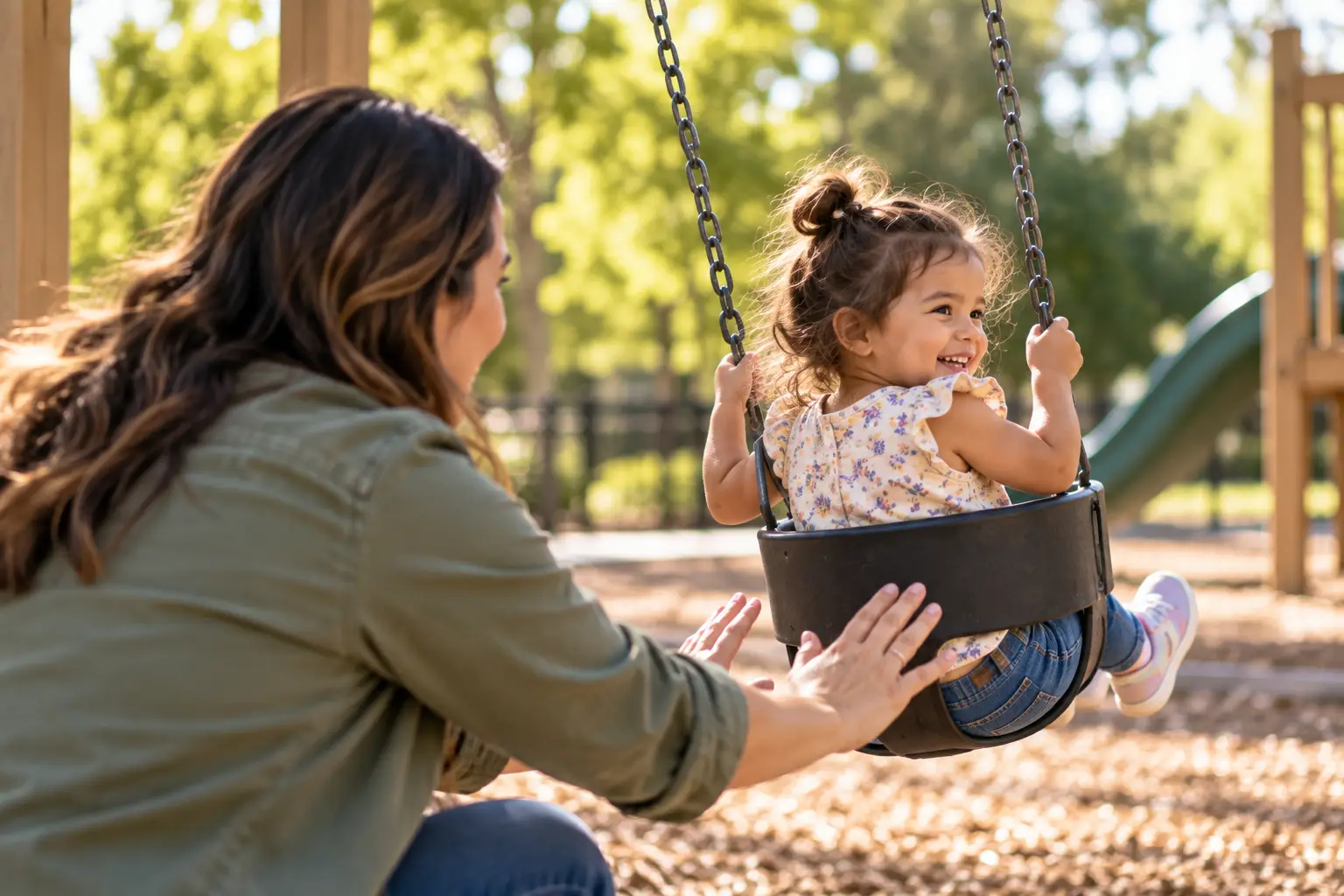
Build language into outside time. Let your child choose between two toys (“ball or swing?”), count the pushes on the swing, or label items in the yard. Being outside is already motivating, so the teaching blends right.
For more ideas, explore these ABA strategies you can use at home. Consistency matters more than perfection. Even a few extra pauses during your daily routine give your child chances to practice communication in the moments that count.
How Bierman Builds Learning Around Play
Bierman Autism Centers designs therapy around play from the ground up. Each center is a bright, engaging environment where children can thrive in a supportive, play-based setting. Programs are individualized, and clinicians collect data during play rather than pulling children away to test separately. Across 30+ centers in 7 states, with 400+ Program Graduations and 1,000,000+ goals mastered, Bierman’s model is built on the idea that children do not have to choose between having fun and making progress.
Turn Everyday Moments Into Learning Opportunities
Naturalistic teaching turns the ordinary moments of childhood into learning opportunities. Bubbles, crackers, swings, and playground slides become the lesson. When the motivation is real and the reward is the thing itself, children with autism build skills they can carry into new settings. Start by watching where your child’s attention goes, follow that lead, pause before you hand over what they want, and reinforce even a look, a point, or a sound with the thing they asked for.
Bierman weaves naturalistic teaching through individualized, play-based ABA therapy services designed to help your child express their needs and build life skills that help children succeed. Our team is happy to explain how naturalistic teaching fits your child’s plan.
Bierman’s ABA therapy services combine DTT with naturalistic teaching in play-based programs designed around each child’s goals. If you have questions about the methods in your child’s treatment plan, our team is happy to walk you through them.
Frequently asked questions
What is an example of naturalistic teaching in ABA?
A child reaches for a bubble wand, and the therapist pauses, models the word “bubbles,” and waits. When the child says or approximates the word, they immediately get to blow bubbles. The learning happens inside the play the child already chose.
What are the types of naturalistic teaching?
The most common naturalistic strategies are incidental teaching and pivotal response training (PRT). Each follows the child’s motivation and uses natural rewards, but they differ in how the adult sets up and prompts the learning moment.
What is the difference between naturalistic teaching and DTT?
Naturalistic teaching follows the child’s lead during play and daily routines, while discrete trial training (DTT) is therapist-led and highly structured. Most quality ABA programs use both, choosing the method that fits each skill and each child.
Why does naturalistic teaching help skills generalize?
Because the child learns skills in the same places and situations where they will use them, the gap between the teaching setting and real life is smaller. Requesting a snack at the kitchen table transfers more easily than the same skill practiced only at a therapy table.
Can parents use naturalistic teaching at home?
Yes. The approach relies on everyday routines and the things already in your home. Narrating play, pausing before you hand over a wanted item, and offering choices are all naturalistic teaching. Your child’s BCBA can suggest one or two goals to focus on so the practice stays light and playful.