
In this article
- What Does “Discrete Trial” Mean?
- The 5 Parts of a Discrete Trial
- Discrete Trial Training Examples
- What Skills Does DTT Teach?
- DTT vs. Naturalistic Teaching: What’s the Difference?
- Is DTT Outdated or Too Rigid?
- How Bierman Uses DTT in Play-Based Learning
- Your Child’s Learning, One Trial at a Time
- Frequently Asked Questions
Discrete trial training (DTT) is a structured teaching method used in ABA therapy that breaks skills into small, repeatable steps, with each step taught through short practice opportunities called trials. Parents often hear the term in treatment plans and IEP meetings, and this guide explains it in plain language so you can feel confident about what is happening in your child’s day. Below, you will see exactly how a single trial works, what it looks like in action, and how today’s programs blend it with play so your child stays engaged.
What Does “Discrete Trial” Mean?
Each trial is one complete teaching unit, or learning opportunity, with a clear beginning and end, usually lasting only a few seconds. Think of it like a single flashcard flip rather than a full lesson.
Why does breaking skills down this small help? Children with autism spectrum disorder often learn best when they can focus on one piece of information at a time. A big, multi-step task like “get dressed” can feel overwhelming. “Pull shirt over head” is one clear action your child can practice and feel good about. That success builds momentum. Once one step is solid, the next is layered on. Over time, the small pieces connect into a complete skill your child can use independently.

The 5 Parts of a Discrete Trial
Discrete trials follow a similar five-part structure. Here is one example traced through all five steps: teaching a child to “touch the red block” when three colored blocks sit on the table.
1. Instruction (the Discriminative Stimulus, or SD)
The therapist gives a short, clear cue that signals what your child should do. In our example, the therapist says, “Touch the red block.” The instruction stays consistent so your child knows exactly what is being asked.
2. Prompt
If your child is still learning, the therapist adds a prompt, like gently pointing toward the red block. Prompts are training wheels, and as your child gains confidence, the therapist gradually reduces the help until your child responds on their own. Behavior analysts call this prompt fading, and a good plan always includes it.
3. Response
This is your child’s action. Your child either touches the red block or touches a different block. Both outcomes give the therapist useful information.
4. Consequence
Consequence is the word used in ABA to describe what happens after responding occurs. For example, a correct response earns immediate reinforcement: something your child enjoys, like praise, a high five, or brief access to a favorite toy. An incorrect response gets a calm, neutral correction. The therapist might say “Let’s try again” and re-present the instruction with a little more support.
5. Inter-Trial Interval
A brief pause of a few seconds separates one trial from the next. This small reset helps your child process what just happened before the next learning opportunity begins.
That’s it – the full cycle. Five parts, a handful of seconds, and one clear data point the team can track. Curious how structured teaching fits into play-based learning? See how Bierman builds each child’s program.
Discrete Trial Training Examples
Reading about the five parts is helpful, but seeing how DTT plays out across different skills makes it click. Here are three quick examples so you can picture each exchange.
Requesting a Preferred Toy
A favorite car sits within your child’s view but just out of reach. The therapist holds it up and waits. The instruction is the visible item plus an expectant pause. Your child says “car” or hands over a picture card. The therapist immediately gives the car and says, “You asked for the car! Nice job.” After a brief pause, the therapist sets up the next trial with a different preferred item.
- This example uses 4 of the 5 steps above: the child responded without a prompt and got the car and praise right away. If your child isn’t responding on their own yet, keep the same structure and add a prompt, like saying “car” as you hold up the item and pause, or tapping the car picture card. Your child gets the support they need and still gets the exciting payoff of getting the car.
Identifying Colors
Three crayons sit on the table. The therapist says, “Point to blue.” Your child points to the blue crayon, and the therapist responds with warm praise and lets your child scribble with it for a moment. If your child points to a different color, the therapist repeats the instruction “point to blue,” and then calmly guides your child’s hand toward the blue crayon and tries again.

Imitating a Clap
The therapist claps and says, “Do this.” Your child claps back. Immediate reinforcement follows, maybe a silly sound effect or a tickle your child loves. This trial targets imitation, a foundational skill that opens the door to learning from peers later on.
Each example follows the same trial structure, but is individualized to the level of help the child currently needs. The skill changes, but the overall framework stays consistent, and that predictability is part of what helps children feel safe enough to try. Many of the same targets can be practiced with ABA strategies at home.
What Skills Does DTT Teach?
DTT works well for skills that benefit from repeated, focused practice. The most common targets are communication and early language, imitation, matching and academic readiness, and self-help steps like handwashing or toothbrushing.
You might hear your child’s BCBA mention “mass trials.” That simply means repeated practice of the same target, giving your child many opportunities to get it right and build fluency.
Is DTT the only way to teach these skills? No, absolutely not! For foundational skills where your child needs lots of practice with clear feedback, it is one of the most useful tools a team has. Children who are nonverbal or minimally verbal often start here, with early requesting and labeling broken into small, achievable steps.
DTT vs. Naturalistic Teaching: What’s the Difference?
DTT is therapist-led and highly structured. Naturalistic teaching follows your child’s motivation during play and embeds learning into everyday moments. Most quality programs use both, and the BCBA chooses based on the skill and the child.
Here is how the two compare:
- Who leads: In DTT, the therapist sets the pace. In naturalistic teaching, your child’s interests guide the moment.
- Setting: DTT often happens in a structured spot like a table or mat. However, it can be implemented anywhere. Naturalistic teaching happens in play areas, at snack time, or outdoors.
- Reinforcement: In DTT, the reward may be separate from the task, like praise or a token. In naturalistic teaching, the reward is built into the activity itself.
- Best for: DTT suits new or foundational skills. Naturalistic teaching helps your child use those skills across settings.
- Pace: DTT often runs many trials in a row. Naturalistic teaching follows natural opportunities as they come.
Neither approach is “better.” They serve different purposes, and a strong program blends them based on what your child needs right now.
Is DTT Outdated or Too Rigid?
No. The table-drill stereotype comes from decades-old descriptions that do not reflect modern practice. Today’s discrete trial training looks and feels very different.
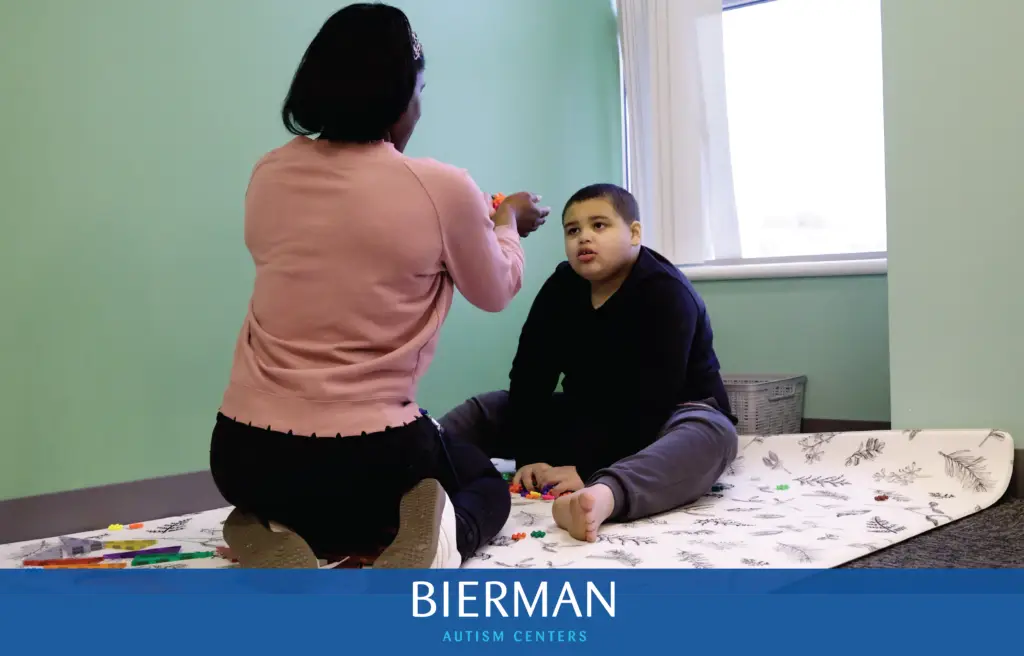
At Bierman Autism Centers, therapists embed trials into play. Your child stacking blocks might get a quick color-identification trial woven into the game. A requesting trial might use the bubble wand your child already reached for. The structure is still there, but your child experiences it as fun. The discrete trial teaching method is embedded into play, creating consistency, sufficient support, and enough learning opportunities to quickly learn and maintain the skill.
Therapists also follow your child’s pace. If your child needs a break or shifts interest, the plan adapts. DTT is paired with naturalistic teaching throughout the day, so learning feels varied and engaging rather than repetitive.

How Bierman Uses DTT in Play-Based Learning
BCBAs at Bierman design each child’s individualized program, choosing which skills to target with DTT and which to address through naturalistic teaching. RBTs then run trials within play throughout the day. Data from every trial guides the plan: when your child masters a target, the team moves on, and when progress stalls, the team adjusts the approach.
Across 30+ centers in 7 states, with 400+ successful graduations and more than 1,000,000 goals mastered, this is how Bierman pairs structured teaching with a child-first, play-based environment. If any other terms from your child’s treatment plan need translating, our ABA glossary can help.
Your Child’s Learning, One Trial at a Time
Discrete trial training gives children with autism a clear, consistent way to learn new skills, one small step at a time. When delivered well, it doesn’t look like drills or worksheets. It looks like a child laughing during a block game and, almost without noticing, learning to follow directions and communicate what they want. Ask your BCBA which skills your child will practice through DTT and how those trials are woven into play, then bring the same clear instructions and quick celebrations into everyday moments at home. Simply put, DTT is the method in which instructor-led learning opportunities lead to exciting outcomes for your child to strengthen the behavior that the instructor is giving the opportunity for.
Bierman’s ABA therapy services combine DTT with naturalistic teaching in play-based programs designed around each child’s goals. If you have questions about the methods in your child’s treatment plan, our team is happy to walk you through them.
Frequently asked questions
What are the 5 steps of DTT?
The five steps of a discrete trial are the instruction (also called the discriminative stimulus), the prompt, the child’s response, the consequence, and the inter-trial interval (time between giving the consequence and then presenting another learning opportunity). Together they form one complete, repeatable teaching unit that usually lasts only a few seconds.
What is an example of discrete trial training?
A therapist places a red block on the table and says “touch red.” If the child touches it, they immediately earn praise or a favorite toy. If not, the therapist re-presents the instruction and then calmly guides their hand, then tries again. Each short exchange is one discrete trial.
What is the difference between DTT and chaining?
DTT teaches individual skills through short, repeated trials, while chaining links a sequence of already-learned steps into a complete routine, like handwashing. Therapists often use DTT to teach each step first, then chaining to connect the steps together.
Is DTT the same as ABA?
No. ABA is the overall science of learning and behavior, and DTT is one teaching method used within ABA. Quality ABA programs combine DTT with naturalistic, play-based methods depending on each child’s goals.
Does DTT work for children who are nonverbal?
Yes. DTT is often a strong starting point for children who are nonverbal or minimally verbal because it breaks the building blocks of communication into small, achievable steps, such as pointing, using pictures, or approximating sounds, and reinforces every success immediately.
How many hours of DTT does a child need?
There is no set number. A BCBA determines hours based on an assessment of your child’s goals and needs. DTT is typically woven through a broader ABA program rather than delivered as a standalone block of hours.