
Most families searching for ABA therapy in Boston do not struggle to find providers. They struggle to figure out which one actually fits their child. The metro area has dozens of options, and every website tends to sound the same: individualized care, evidence-based approach, compassionate team. Meanwhile, you are trying to understand what therapy will look like on a Tuesday morning and whether your insurance will cover it.
This guide cuts through the noise. Instead of a generic overview, you will find practical details about how ABA services work across greater Boston, what to expect in the first few weeks, and how to judge whether a program is truly meeting your child’s needs. Whether your child was recently diagnosed or you are exploring a switch from another provider, this is the roadmap you need right now.
What ABA therapy actually does for children with autism
Applied behavior analysis is a structured, research-backed approach that helps children with autism build communication and daily living skills. It works by breaking complex behaviors into smaller, teachable steps and using positive reinforcement to encourage progress. The goal is not to make a child act differently for its own sake. It is to help them build skills that support success at home and in their community.
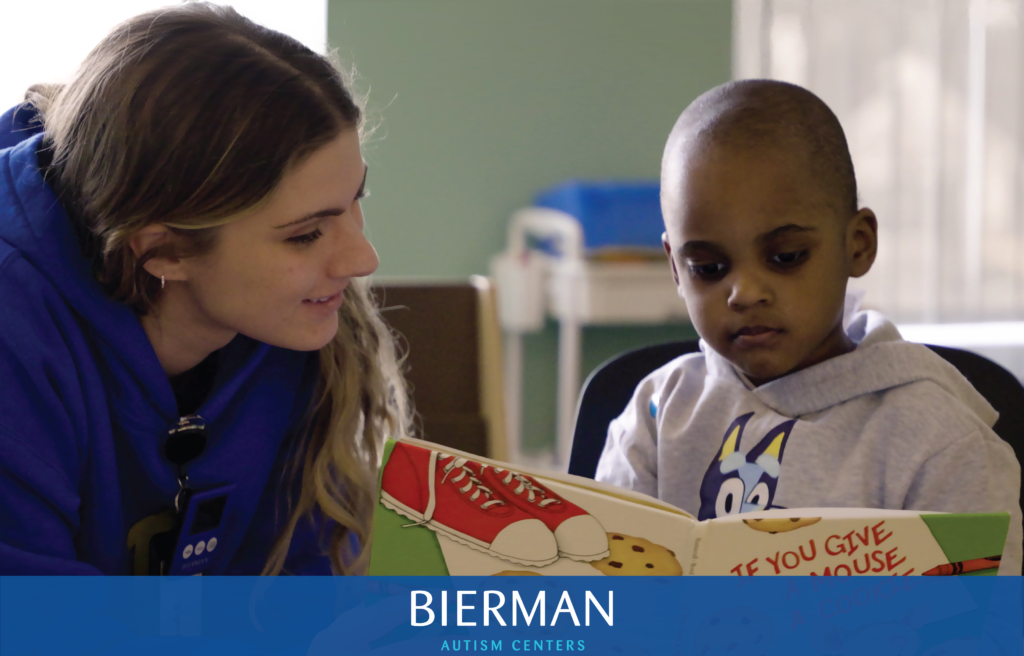
What makes modern ABA distinct is its emphasis on measurable outcomes paired with a naturalistic, play-based style. At Bierman Autism Centers, learning happens through play and everyday moments rather than repetitive drills, and therapists track data on every session. If something is not working, the approach adjusts. That feedback loop matters because children respond to different strategies at different stages of development.
Who delivers ABA and what their roles look like
A board-certified behavior analyst (BCBA) designs and oversees each child’s treatment plan. They conduct assessments, set goals, and review progress data regularly to keep the plan on track. Registered behavior technicians (RBTs) work directly with your child during sessions, carrying out the strategies the BCBA has designed.
You will also play an active role. Parent and caregiver training is a core part of effective ABA, because the skills your child learns in therapy need to carry over into daily routines. Programs that skip caregiver involvement often see slower generalization of skills, so ask about this upfront when you evaluate any provider. You can read more about why Bierman recommends ABA for children.
Early intervention ABA in Boston: why starting young matters
Research consistently shows that children who begin ABA between ages two and five tend to make the most significant gains. During these early years the brain is remarkably adaptable, and focused intervention can shape developmental trajectories in meaningful ways. That does not mean older children cannot benefit, but the window for early intervention is genuinely time-sensitive. You can learn more about Bierman’s early intervention approach, and Massachusetts also runs a statewide Early Intervention program for children under three that does not require a formal diagnosis to start.
Signs your child may benefit from early ABA
You might notice your child is not responding to their name by 12 months, or that they have not developed pointing or waving gestures. Limited eye contact or a strong preference for rigid routines can also be early indicators. Some children show a regression in skills they previously had, such as losing words they once used.
None of these signs alone confirms autism, but they do warrant a conversation with your pediatrician or a diagnostic specialist. If you are at the very start of this process, our overview of autism services in greater Boston walks through evaluation, therapy, and insurance step by step.
What early ABA sessions look like for toddlers
For young children, effective ABA does not look like sitting at a desk. Children thrive in a supportive, play-based environment where therapists embed learning into games and sensory activities. A session might involve a therapist using a favorite toy to encourage requesting words, or turning a simple puzzle into practice for turn-taking.

Skill areas typically targeted include expressive and receptive communication, following instructions, and basic self-care like hand washing or putting on shoes. Intensity matters too. Many evidence-based programs recommend a higher number of weekly hours for young children, often around 30 hours a week for comprehensive programs, though the right number always depends on your child’s individual assessment.
Center-based vs. in-home ABA therapy for Boston families
One of the first decisions you will face is where therapy happens. Both center-based and in-home ABA have real strengths, and the right choice depends on your child’s age and your family’s logistics.
| Center-based ABA | In-home ABA | |
| Setting | Dedicated clinic built for therapy | Your home |
| Social practice | Peers on site for natural interaction | Limited to family and visitors |
| Best suited for | School readiness, structured routines | Mealtime, bedtime, and other home routines |
| Logistics | Family travels to the center | Therapist travels to you |
| Added services | Speech and OT often available on site | Coordinated separately |
Center-based ABA provides a purpose-built environment with structured spaces and consistent routines, and children practice skills alongside peers. Centers also offer access to multidisciplinary teams, so your child might receive speech therapy and occupational therapy in the same facility. In-home ABA brings therapy into your child’s natural environment, which helps with skills like mealtime and bedtime routines, and is particularly useful for very young children or families with transportation challenges. Many families combine both at different stages, and a good BCBA will help you weigh what makes sense for your child’s current goals.
How the ABA assessment and treatment planning process works
Getting started with ABA in Boston follows a fairly predictable sequence, though timelines vary by provider and insurance.
Step by step: from referral to first session
The process usually begins with a diagnostic evaluation. If your child already has an autism diagnosis, you can move directly to intake. If not, you will need an evaluation from a licensed clinician, and some providers, including Bierman, offer diagnostic services in-house using gold-standard assessments like the ADOS-2. Once you have a diagnosis, the next steps unfold in a consistent order:
- Insurance verification. The provider’s team checks your plan’s coverage for ABA. Massachusetts mandates coverage under most private plans, but specifics around hours and copays vary.
- Initial assessment. A BCBA conducts a thorough skills assessment to identify your child’s current abilities and areas for growth.
- Treatment plan development. Based on the assessment, the BCBA builds an individualized plan with specific, measurable goals.
- Therapist matching. Your child is paired with an RBT whose style and experience fit their needs.
- Session launch. Therapy begins, usually with a gradual ramp-up so your child can adjust.
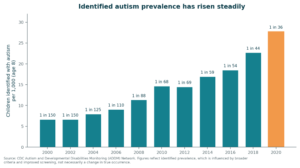
From intake to first session, the timeline ranges from a few weeks to a couple of months, depending on waitlist status and insurance processing. Demand for ABA across greater Boston is high, partly because more children are being identified with autism than in the past, so ask providers directly about their current wait times. This is one of the most important questions you can ask early.
Insurance and affordability in Massachusetts
Massachusetts has some of the strongest autism insurance protections in the country, which genuinely helps families. State law has required most commercial plans to cover the diagnosis and treatment of autism, including ABA, since the Autism Insurance Act took effect in 2011, and MassHealth covers medically necessary ABA as well. Even so, gaps remain in the broader system. The Arc of Massachusetts has estimated that thousands of adults with autism on MassHealth still lack coverage for ABA, a reminder that coverage is not universal across every population.
When verifying your benefits, ask specifically about the number of authorized hours, what your out-of-pocket costs look like, and whether prior authorization is required. A good provider will handle much of this legwork for you, and Bierman’s insurance resource page is a useful starting point. If you would rather not navigate this alone, you can also reach out to Bierman directly, and the team will help verify your benefits, explain your options, and coordinate the intake process on your behalf.
Measuring progress in Boston ABA programs
One of ABA’s greatest strengths is its commitment to data. Every session generates information about your child’s progress toward their goals, and that data drives real-time adjustments to the plan. BCBAs typically review progress on a regular cycle, often monthly, and update goals as your child masters skills. You should expect clear communication about what is being measured, how your child is performing, and what comes next. If a provider cannot show you concrete data on your child’s progress, treat that as a red flag.
What meaningful progress looks like
Progress is not always dramatic. Sometimes it is your child using a new word unprompted for the first time. Sometimes it is sitting through a meal without distress. These moments matter enormously, even when they look small on paper. Bierman, which operates more than 30 centers across seven states, tracks outcomes transparently and publishes them on its outcomes for families page. Look for that kind of outcome transparency from any provider you evaluate.
ABA therapy across the Boston metro: services close to home
Greater Boston offers strong geographic coverage for ABA, and Bierman operates four centers across the region:
| Center | Area served | Convenient via |
| Needham | Inner western suburbs and MetroWest, including Newton, Brookline, Wellesley, and Framingham | Route 128 / I-95 |
| Quincy | South Shore and southern Boston, including Braintree, Weymouth, and Milton | I-93 / Route 3 |
| Bedford | Northwest suburbs, including Lexington, Burlington, and Concord | Route 3 / I-95 |
| Danvers | North Shore, including Salem, Peabody, and Beverly | Route 128 / Route 1 |
Consistency is essential to ABA’s effectiveness, and a 45-minute drive each way can quietly undermine attendance, so proximity matters. When evaluating a location, consider how close it is to your home or your child’s school, whether complementary services like speech and occupational therapy are available on site, and whether the center’s hours fit your family’s schedule. For older children who are in school during the day, Bierman also runs an after-school program called Evening Explorers. To compare centers by location and commute across Greater Boston, explore our Massachusetts centers.
Frequently asked questions
What should I ask during an ABA provider tour or consultation?
Ask who will supervise your child’s case, how often supervision happens, and how staff are trained. Ask to see a sample behavior plan and a sample progress report so you understand how goals, data, and parent communication are handled.
How can I tell if a program is a good match for my child’s temperament and sensory needs?
Look for providers who can describe how they individualize session pacing and sensory supports based on an intake profile. A strong program will explain how it reduces distress, builds rapport first, and adapts the environment without giving up on skill-building.
How do I coordinate ABA with school services like an IEP in the Boston area?
Share priority goals across teams and request permission-based communication between your BCBA and school staff so strategies stay consistent. Aligning targets such as communication and independence usually works better than running separate plans that compete for time and attention.
How do waitlists work, and what can families do while waiting to start?
Waitlists often depend on staffing and scheduling, as well as whether a provider can support your child’s needed hours. While you wait, ask about short-term parent coaching and home practice routines so progress does not pause. If your child is under three, Massachusetts Early Intervention can often start quickly in parallel.
How can I help skills show up at home, in the community, and with extended family?
Ask your provider to create a simple home plan with a few high-impact targets and scripts that multiple caregivers can follow. Practicing the same skill in different places, with different people, helps your child use it beyond the therapy setting. Bierman’s virtual caregiver training is built around exactly this.
How should families handle schedule changes, vacations, or missed sessions?
Request a written continuity plan that includes priority goals to practice and a re-entry ramp after time away. Consistent routines matter, but a good program will help you maintain progress through realistic at-home practice when life happens.
What does it mean when a provider says a child is ready to reduce hours or discharge?
It typically means key goals are stable and skills are showing up across settings, and the team sees a plan for maintaining gains with less support. Ask for clear criteria, a step-down timeline, and a maintenance plan that includes follow-up check-ins if needs change.
Your next step toward the right fit
Finding the right ABA program is one of the most impactful decisions you will make as a family. Greater Boston offers strong options, solid insurance protections, and a community of providers committed to helping children with autism reach their potential. What matters most is finding a program that pairs clinical rigor with genuine warmth, where your child feels safe and excited to learn.
Bierman brings a play-based, center-based approach to families across Massachusetts, with a track record built on measurable outcomes and family partnership. When you are ready to take the next step, you can request services and a member of the team will help you through intake.